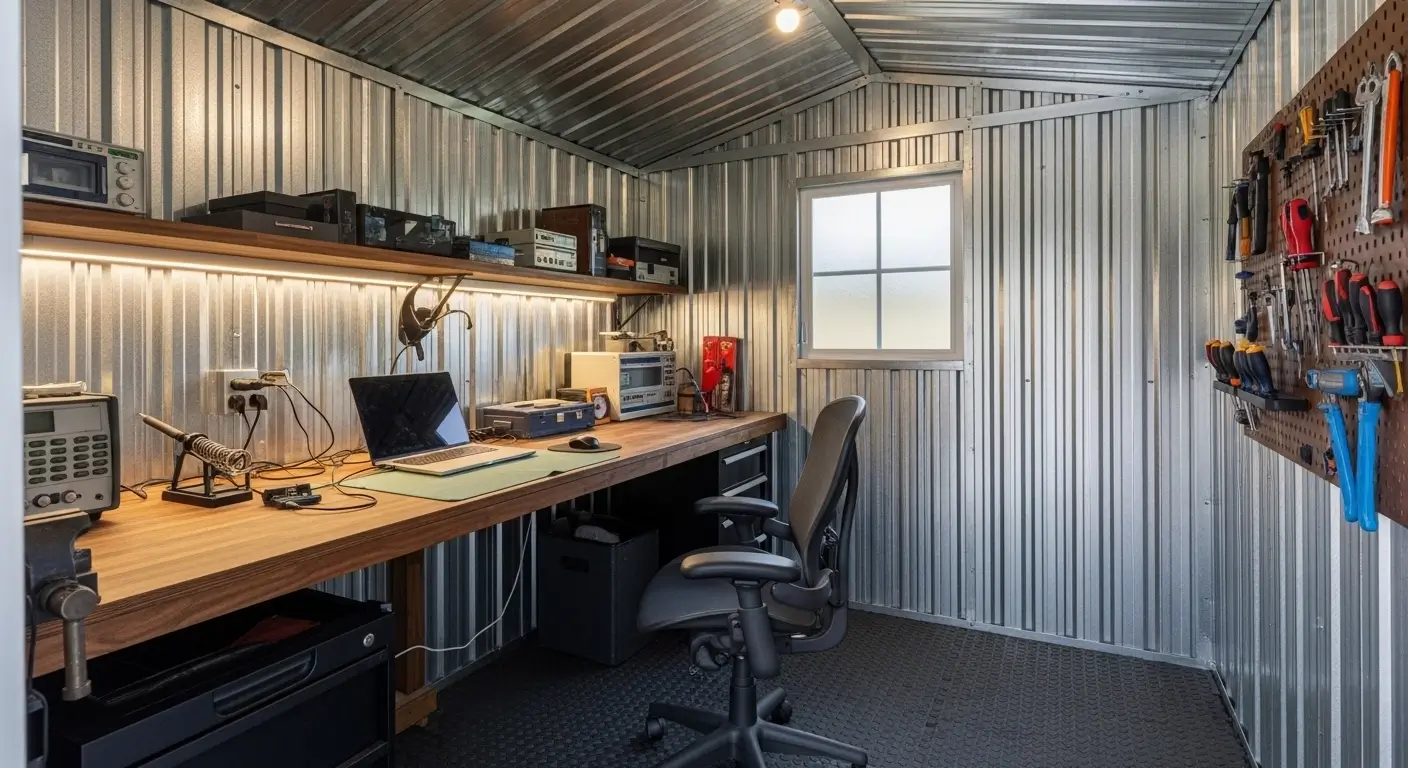
The Thermal Performance Gap: Why Metal Sheds Fail
In the landscape of 2026 property management, galvanized steel sheds are the gold standard for affordability and security. However, they possess a critical flaw: thermal conductivity. Without intervention, a metal shed is essentially a thermal conductor that bakes your gear in the summer and freezes it in the winter. This rapid temperature fluctuation is the primary cause of oxidation on expensive tools and circuit failure in electric lawn fleets. To protect your investment, you must bridge the thermal performance gap.
Step 1: The Radiant Barrier Revolution
Traditional fiberglass batts are often impractical for the thin walls of a metal shed. In 2026, the elite DIYer utilizes high-performance radiant barriers. Products like the SmartSHIELD—a 5mm reflective foil—block up to 97% of radiant heat transfer. By lining the interior of your Aoxun or similar galvanized structure with this material, you create a "thermos effect" that maintains a stable internal temperature regardless of the external environment.
Why Reflective Foil is the 2026 Standard
Reflective foil doesn't just insulate; it manages moisture. Condensation is the silent killer of metal sheds. When warm, humid air hits a cold steel wall, it liquefies, leading to rust. A properly installed radiant barrier acts as a vapor barrier, preventing this moisture from ever reaching the metal skin. This double-action protection is the "Advantage Path" to a 20-year shed lifespan.
Step 2: Precision Sealing and Taping
Insulation is only half the battle. If your shed has air leaks, your thermal energy is escaping. Professional weather-proofing requires surgical precision at the seams. Using high-grade transparent sealing tape ensures that your radiant barrier is airtight. Focus specifically on the corner joints and the roof-to-wall transitions, as these are the primary zones for heat escape.
Creating a High-Performance Workspace
By transforming your shed into a climate-controlled zone, you unlock its potential as a year-round workspace. It’s no longer just a storage box; it’s an extension of your home’s utility. This transition allows you to house sensitive lithium-ion batteries and high-end power tools with zero fear of seasonal degradation.
3 Steps to Your Climate-Controlled Sanctuary:
- Analyze the Load: Calculate your square footage to ensure you have enough reflective foil to cover both walls and the ceiling.
- Seal the Envelope: Use weather-sealing tape on all window and door seams to prevent air infiltration.
- Prioritize Ventilation: Even an insulated shed needs a small, screened vent to ensure fresh air exchange and prevent stagnant humidity.
Your tools are your livelihood. Don't let them be destroyed by a lack of thermal planning. By choosing the Advantage Path of professional insulation, you ensure your backyard infrastructure is ready for the challenges of 2026.