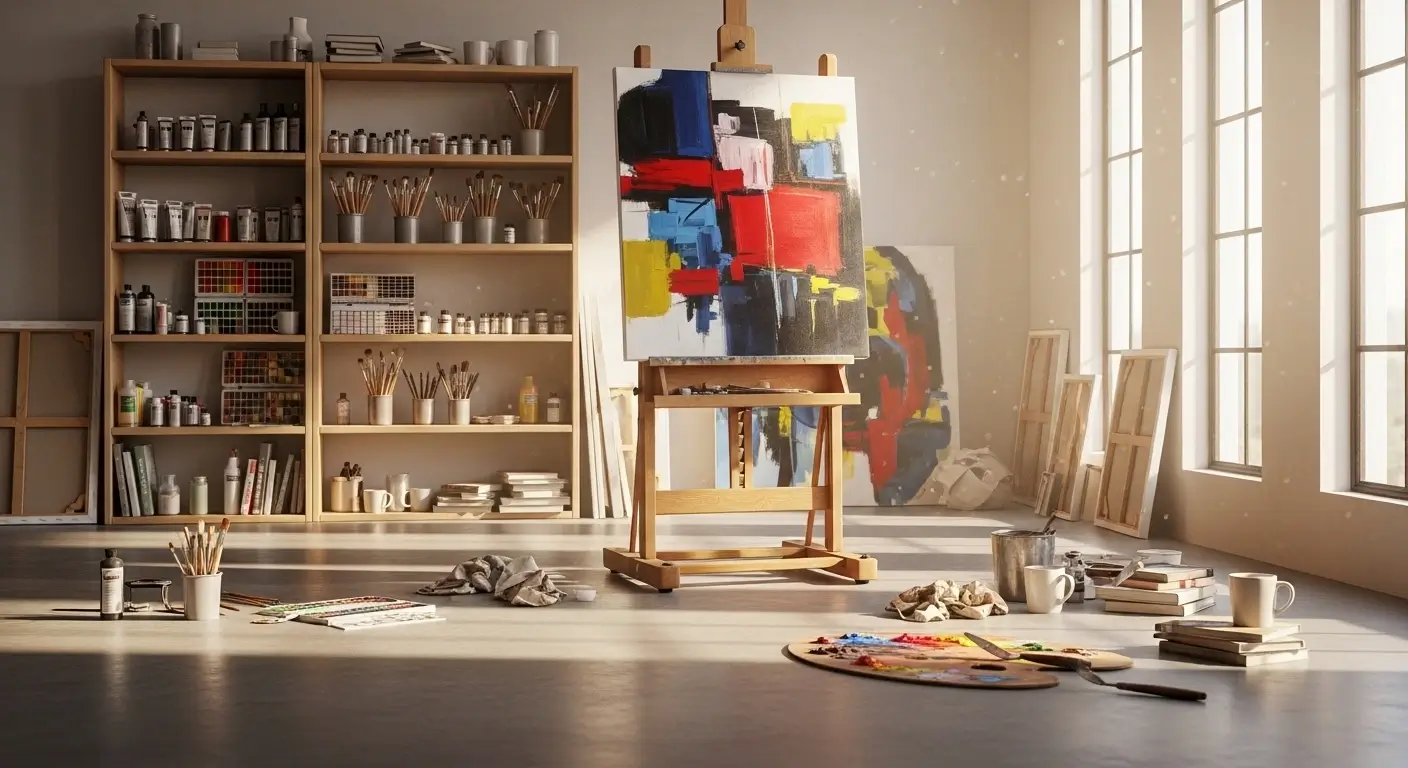
Creativity requires mental "white space." When your physical studio is cluttered with unorganized brushes, scattered tubes of paint, and unstable canvases, your brain spends valuable energy processing that chaos instead of focusing on the art. In 2026, the most successful artists are those who treat their studio like a laboratory—clean, organized, and ready for experimentation.
The "Lost Tool" Tax on Your Art
Every time you have to stop a painting to search for a specific liner brush or a missing tube of cobalt blue, you break your "flow state." This is the "lost tool tax," and it is the enemy of artistic breakthroughs. The solution is vertical organization. By utilizing multi-slot brush holders and dedicated storage systems, you ensure that your most important tools are always visible and within reach.
The Stability Anchor: Your Easel
A second major pain point for artists is physical discomfort and equipment instability. A flimsy easel that wobbles during heavy brushwork is a constant distraction. A professional art studio requires a structural anchor—a heavy-duty wooden stand that provides a rock-solid surface at the perfect ergonomic height. This allows you to work longer and with more precision, preserving your back and neck for years of creative production.
Designing for Inspiration
An organized space isn't just about neatness; it's about invitation. A studio that is organized and ready to go is an invitation to create. When your brushes are standing ready and your easel is set, the barrier to starting a new project disappears. This is the Advantage Path for artists: removing the friction between an idea and its execution.
3 Steps to Studio Mastery:
- Categorize and Verticalize: Use holders to keep brushes upright and categorized by type.
- Invest in a Structural Foundation: Use a professional-grade easel to maintain consistent working angles.
- Define Your Zones: Separate your "wet" and "dry" areas to prevent accidental messes.
Your art deserves a professional environment. By upgrading your studio organization, you aren't just cleaning up—you are clearing the way for your next masterpiece.