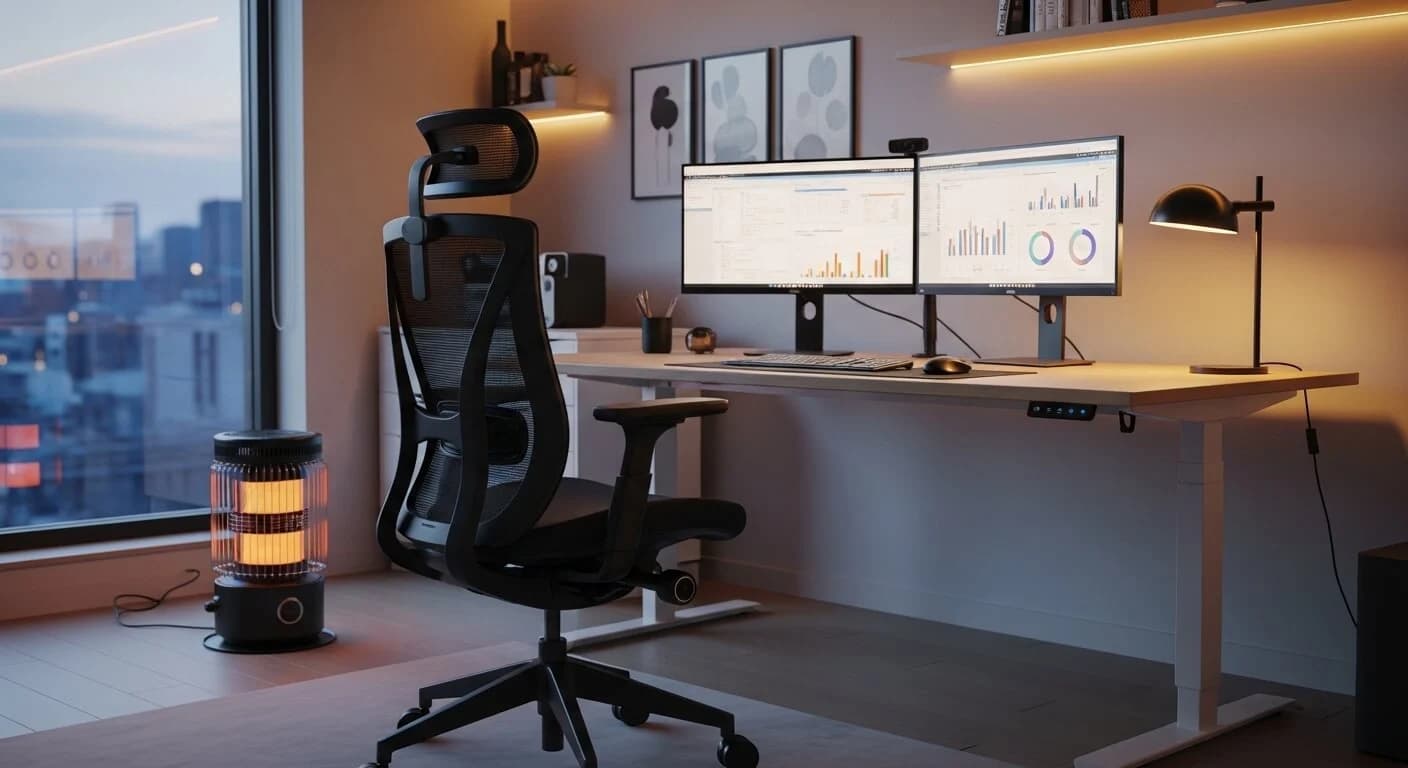
As we look toward 2026, the boundaries between professional and personal spaces have blurred, making the home office the most critical room in the modern residence. However, a desk and a laptop are no longer sufficient. To achieve peak performance, your environment must be an extension of your biological needs. This starts with two pillars of workspace engineering: ergonomics and climate control.
The Science of Support: Ergonomic Evolution
Prolonged sitting is a physiological tax that most remote workers pay in the form of lower back pain and reduced cognitive focus. The solution lies in dynamic support. An ergonomic chair isn't just a seat; it's a tool that maintains the natural "S" curve of your spine. By distributing weight evenly across the pelvis and providing adjustable lumbar support, you can eliminate the micro-stressors that lead to fatigue by mid-afternoon.
Modern setups now prioritize multi-point adjustability. Your chair should adapt to your movement, whether you are leaning in for a deep-focus task or reclining for a strategic call. This movement encourages blood flow, keeping the brain oxygenated and the body resilient.
The Thermal Advantage: Why Temperature Matters
Climate control is the often-overlooked variable in the productivity equation. Research has consistently shown that cognitive function dips significantly when a room is too cold or too hot. A "warm" office isn't just about comfort; it's about maintaining a ideal 72-degree micro-climate around your desk without the noise or dry air of traditional central heating systems.
The Synergy of Gear
When you combine a high-performance mesh chair with precise temperature management, you create an "Advantage Path" for your career. You’re not just working from home; you’re working from a high-performance hub designed to maximize your most valuable asset: your focus.
Summary Checklist for 2026:
- Invest in a chair with active lumbar support and breathable mesh.
- Implement a dedicated space heater with auto-climate sensing for the winter months.
- Ensure your monitor is at eye level to prevent neck strain.
- Maintain a consistent thermal environment to preserve cognitive energy.