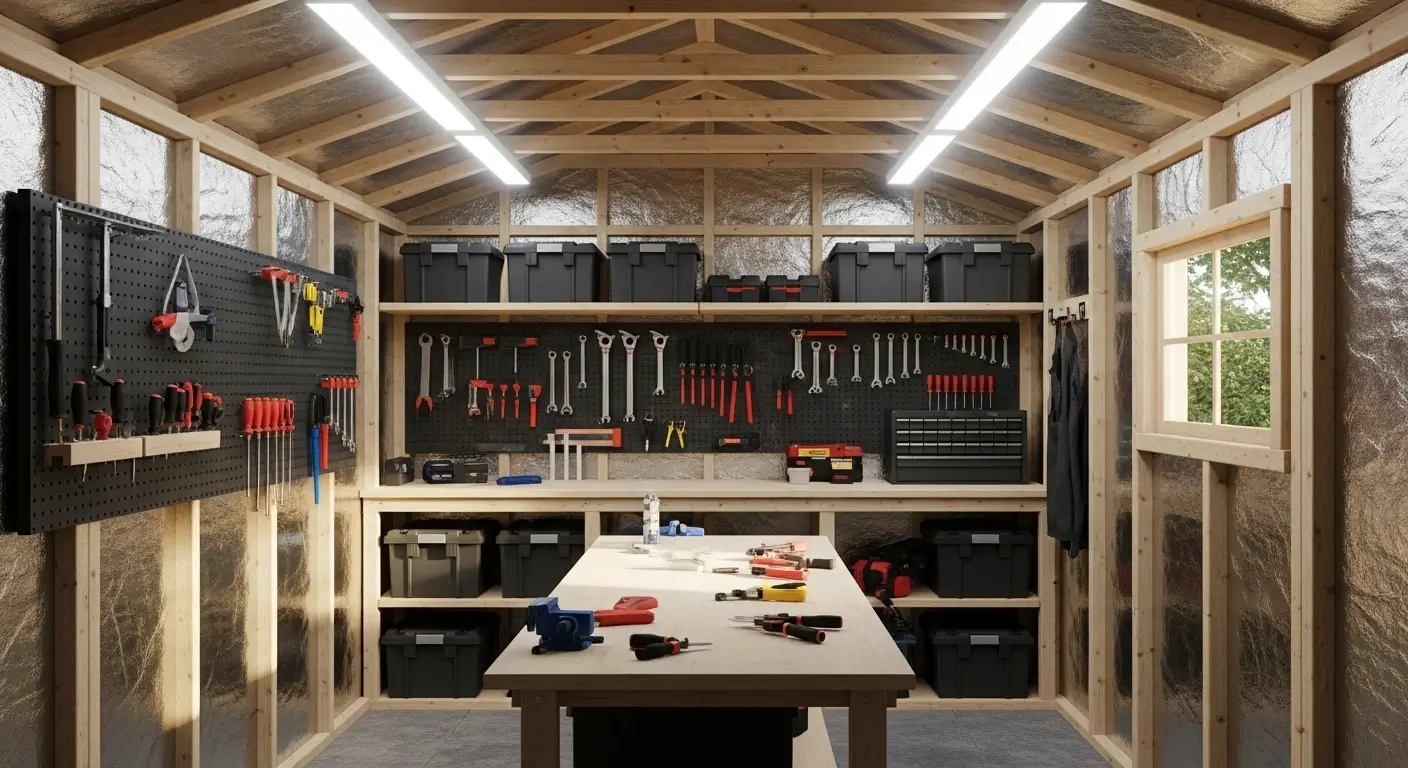
Your outdoor storage shed houses some of your most expensive investments: generators, power tools, and seasonal gear. Yet, most sheds are essentially thin shells that offer zero protection against thermal shock and humidity. In 2026, with increasingly volatile weather patterns, "basic storage" is no longer enough. To protect your equipment, you must transform your shed into a climate-stable environment through professional insulation and sealing.
The Thermal Stress Pain Point: Why Gear Fails
The primary killer of stored electronics and mechanical tools isn't use—it's temperature fluctuations. When the internal temperature of a shed swings 40 degrees in a single day, condensation forms on metal surfaces, leading to rapid oxidation and internal circuit failure. Insulation is the "armor" that slows this thermal transfer. By using high-performance reflective foil, you can block up to 97% of radiant heat, maintaining a consistent internal temperature regardless of the weather outside.
The Invisible Leak: The Importance of Sealing
Even the best insulation is useless if the structure is "leaking" air. Gaps around doors and windows are invitations for moisture, dust, and pests. Professional weather-proofing requires a surgical approach to sealing. A high-quality, transparent sealing tape provides a permanent barrier against drafts and humidity without ruining the aesthetics of your structure. It is the final, critical step in creating a truly weather-proof sanctuary for your gear.
The ROI of Protection
Think of weather-proofing as an insurance policy for your productivity. The cost of a roll of reflective foil and high-grade sealing tape is a fraction of the cost of replacing a rusted lawnmower or a moisture-damaged power saw. This is the Advantage Path for homeowners: investing a small amount in prevention to avoid the massive expense of replacement.
Your Shed Weather-Proofing Checklist:
- Radiant Barrier: Line the roof and walls with reflective foil to block heat transfer.
- Airtight Seals: Use weather-sealing tape on all window seams and door frames.
- Ventilation Control: Ensure your shed has a screened vent to allow for minimal, controlled airflow to prevent stale air.
Don't leave your gear at the mercy of the elements. By applying these professional insulation techniques, you ensure your tools are ready to work the moment you need them in 2026.